A person you love has died by suicide, and time has split in two. There is the life you had before the call, and the life you are in now. The mind tries to make sense of what cannot be fully explained. The body surges with shock. At the same time, ordinary tasks do not pause. There is the dog to walk, the family to inform, a service to plan, a room to clean. This is the tangle that grief counseling after suicide loss meets head-on: layered sorrow, unanswered questions, and nervous systems overloaded by a traumatic event.

I have sat with parents who clutched their phones as if the next message might undo the news. I have heard siblings catalogue missed signs and real signs and imagined signs until words wore thin. I have walked beside spouses who knew how to file the insurance forms but did not know how to sleep in the bed. None of that is a pathology. It is a human response to an unbearable turn.
Grief counseling is not about rushing you toward acceptance or scripting a tidy narrative. Done well, it offers a steady relationship, a safe place for your anger and your love to coexist, and a set of practices that slow the body and mind enough to metabolize shock. It blends the skills of trauma therapy with the tenderness of mourning, and it keeps pace with you rather than the calendar.
What makes suicide grief distinct
Loss by suicide carries elements that often complicate grieving. First, there is a high burden of questions, many unanswerable. Why did this happen, what did I miss, could I have stopped it, did I make it worse? The mind turns these questions by day and dreams them by night. Second, stigma seeps in from culture and sometimes from within families. Well-meaning people avoid the subject or try to smother it with platitudes. This can leave survivors isolated at the very moment they most need company.
Trauma also threads through the loss. You may have discovered the body or received a blunt call from a stranger. Even if you were not present, the imagery can be graphic. Intrusive thoughts can crash in without invitation. Loud noises or sirens can trigger a surge of panic. Grief counseling, in this context, must attend to traumatic stress responses, not just sorrow. This is where the languages of Trauma therapy and Grief counseling overlap. In practice that means we do not press for detailed storytelling in the early days if your system cannot tolerate it. We may start instead with orienting exercises, gentle breath work, and practical anchors.
Finally, there is what therapists call the complicated web of attachment. The person who died was not just a role in your life, they were an attachment figure who shaped your nervous system in ways that often begin in childhood. When they die by suicide, especially if the relationship held unresolved wounds, the old attachment patterns flare. You might swing from clinging to withdrawing, or find yourself checking doors and texts late into the night. Attachment therapy offers a map here, giving words to the instinct to seek proximity, the fear of further loss, and the struggle to trust comfort.
The earliest days: holding your footing
The immediate aftermath of a suicide loss is often chaotic. Some people become hyper-competent, filling the hours with logistics. Others go quiet and slow. Most toggle between the two. Families sometimes split down lines of style: one person wants to talk, another wants solitude. If you are reading this in the first 72 hours, know that your nervous system is doing what it knows to do to keep you afloat.
Many clients ask for concrete guidance for these first days. The following brief checklist can help stabilize the basics while making room for grief.
- Choose two people you trust and ask them to coordinate communication so you do not have to repeat yourself. Sip water and eat simple, familiar foods every few hours to prevent blood sugar crashes that mimic panic. Move your body in small ways every hour, like standing at a window or walking to the mailbox, to discharge some adrenaline. Limit exposure to news, social media, and graphic details until your body settles, especially if there are ongoing investigations. Postpone irreversible decisions for at least a week if possible, including housing changes or major financial moves.
There are exceptions, of course. Some details cannot wait. But most can. In early sessions, I often help people triage demands and draft a simple plan for the week. We put one or two names on paper next to tasks. We note who will handle calls, who will pick up the children, who will field questions from extended family. The act of writing helps steady the fogged mind.
How grief counseling helps
Grief counseling after suicide loss does not take away pain. It does help carry it. The work tends to progress in waves, not stages. One week, the emphasis might be on nervous system stabilization. Another, it might shift to telling stories and remembering the person fully, beyond how they died. Over months, the work often broadens into identity, relationships, and meaning-making.
Several goals usually guide the process:
- Stabilization and safety. First, we help your body and mind return to a workable baseline. That involves practical routines, sleep support, and skills to handle surges of panic or despair. Integration of the traumatic aspects. Intrusive images and sounds need care. We use approaches from Trauma therapy and Somatic therapy that respect the body’s limits and reduce reactivity without erasing memory. Continuing bonds. The relationship with the person who died continues in new form. We make space for letters, rituals, and shared projects that honor them without being swallowed by the manner of death. Rebuilding daily life. We look at parenting, work, money, and health. Grief shrinks bandwidth, so we simplify where possible and create scaffolding where needed. Addressing meaning and guilt. We examine beliefs about responsibility, control, and worth. We challenge cruel self-judgments and explore cultural, family, and spiritual frameworks that support healing.
Therapy is not a one-size protocol. Some people are ready to describe the day of the death within a few sessions. Others carry too much activation to speak more than a sentence or two. A skilled clinician tracks signs of overwhelm in breath, posture, and pacing, and adapts the work to the moment.
The trauma overlay: tending to the body
A suicide loss often imprints the body with acute stress. You might startle easily, feel tense in your shoulders or gut, or go numb at odd times. These are intelligent survival responses. Somatic therapy offers gentle ways to help the body complete stress cycles and widen capacity.
I frequently use orienting, a simple practice of letting the eyes and head slowly turn to register the space you are in. We might name five colors, feel the weight of the chair, and let the neck soften. The goal is not mindfulness as a performance, it is reintroducing a sense of safety to the nervous system. Titration is another core practice. Rather than diving into the hardest memory, we take a small sip of it, pause to notice the body, and return to a calming anchor. Over time, those little sips allow the memory to exist without flooding.
Movement therapy can be useful here. Short walks, gentle stretching, or swaying to music for two minutes can discharge adrenaline in a nonverbal way. I have worked with clients who found that five minutes of pacing before sessions allowed them to think more clearly. Others discovered that a hot shower at night, combined with a slow exhale count of four or six, took the edge off dread enough to fall asleep. The art lies in matching movement to current capacity. High-intensity exercise can help some people, but for others it spikes anxiety. Start with small, steady motions and build up.
Sleep is its own hill to climb. Grief and trauma disturb circadian rhythms. Practical supports matter: consistent lights-out time, a dim room, screens off an hour before bed, light snacks with protein, and, when possible, brief daytime exposure to sunlight. Some clients benefit from a short pre-sleep ritual that includes a few lines spoken to the person who died and a breath practice. Rituals tell the body what comes next.
An attachment lens on suicide loss
Attachment therapy does not ask you to become a different person. It invites you to notice the patterns that shaped how you love and how you seek comfort. When a central relationship disappears, those patterns intensify. If your partner was the person who calmed you, and they die, your nervous system may search for that anchor and spiral without it. If your relationship with the person who died was tense or uneven, you may mistrust comfort, even from people who want to help.
In session, we map those patterns with curiosity, not blame. You learn to name when you are seeking closeness and https://andymlle376.wpsuo.com/somatic-therapy-and-touch-boundaries-safety-first when you are pulling away. We practice asking for what you need in simple, concrete language, such as, sit with me while I eat, or, please text me when you arrive. If you grew up in an environment where needs were ignored or punished, this can feel unnatural at first. Over time, the therapeutic relationship itself acts as a corrective attachment, a place where consistent, reliable attunement helps your system relax. That trust then spreads into other relationships.
Parents who lose a child encounter a particular attachment rupture. The impulse to protect never turns off. After a suicide, that drive collides with the reality that not all harms are preventable. Therapy helps parents hold both truths without collapsing into blame. We work gently with statements like, I did everything I knew to do with the information I had, and, If I could have known more, I would have done more. These are not slogans. They are hard-won acknowledgments that honor love without pretending to control the uncontrollable.
The questions that do not let go
Why. How. When. What if. These words crawl into bed and wake you at 3 a.m. They are not just cognitive puzzles, they are cries for connection and safety. In counseling, we make room for them in multiple ways.
Timelines help some people. We sketch the weeks before the death, noting known events without filling gaps with fantasy. This can correct distortions that shame amplifies. Letter writing is another core practice. You write to the person who died and then, when you are ready, write from their perspective back to you. This is not a belief in the literal response, it is a way to bring the relationship into the room. The empty chair technique, borrowed from Gestalt therapy, can also externalize looping thoughts. You speak to the chair as if your loved one sits there. Then you move to the other chair and speak back. It often surfaces tenderness hidden under anger and anger hidden under guilt.
Cognitive work has its place. Catastrophic thinking and magical responsibility can run rampant. Phrases like, If I had answered faster, they would be alive, grab hold. We test those thoughts gently. What data supports this, what data complicates it, what would you say to a friend with the same thought? We are not seeking to erase responsibility where it exists. We are disentangling the false omnipotence that trauma assigns to survivors. Over time, people develop a more nuanced understanding, one that recognizes multiple forces at play: mental illness, social factors, access to means, personality, stressors, and, yes, the limits of anyone’s power to control another’s choices.
The social world after suicide
Stigma still clings to suicide. Some people avoid saying the word. Others rush toward explanation, pinning the death on a single cause as if naming it restores order. In the early months, you may find yourself deciding, again and again, what to disclose and to whom. You do not owe anyone the details of how your person died. You also do not need to protect the world from the fact of suicide. Many families choose language like died by suicide or ended their life because it is factual and avoids moral judgment.
Workplaces can be supportive or clumsy. Ask a colleague you trust to be a point person for you. Provide them with one or two sentences you are comfortable having shared broadly. Plan for your return with your therapist, including signals you can give if you need to step away. Some clients rehearse responses to well-intended but painful comments. Thank you for caring, I’m not ready to talk about details helps close a conversation that is going too far.
Shame often shows up inside families, too. Grief counseling provides a neutral room to say the unsayable. I have watched relatives glare at the floor for weeks, then finally look up and admit their rage at the one who died, followed by fierce love. It is possible to hold both.
Children and teens: telling the truth with care
Children grieve in bursts. They ask a searing question, hear an answer, and then shift to a game. That rhythm is healthy. Use clear, age-appropriate language. For young children, you might say, Daddy died. He hurt his body on purpose and his body stopped working. Older children can hear, Died by suicide. Avoid euphemisms like passed or went to sleep. Those can breed confusion or fear at bedtime. Expect repeated questions. Consistent answers build trust.
Schools need to know in order to support. A short note to teachers with basic facts and guidance about language helps. I often suggest that parents request flexibility on assignments, access to a quiet space if the child is overwhelmed, and a plan for reentry after absences. Teens will likely turn to peers. That can help and also mislead. Keep channels open at home without forcing talk. Offer structure: rides, meals, a loose curfew negotiated together. Watch for steep declines in functioning, self-harm, or substance use, and connect with specialized support if those appear.
Family rituals help children metabolize grief. Planting a tree, lighting a candle on the person’s birthday, or keeping a small object of theirs in a common space can anchor remembrance. Therapy can guide you in balancing remembrance with life’s forward pull.
Group support and the power of being among your people
Individual therapy carries you one way. Sitting in a room, or a circle online, with others who have lost someone to suicide carries you another way. No one needs to explain why the sudden quiet at dinner hurts. No one asks what could have been done differently as if they were conducting an audit. Among peers, sighs and nods often say enough.
Timing matters. Some people are ready for a group within a month. Others need six months to a year. Good groups are facilitated by clinicians or trained peers who keep conversation grounded, guide away from graphic detail, and honor diverse grief styles. I often suggest starting with a closed group, which means the same members meet over a set number of weeks, before moving to an open drop-in group. The continuity allows trust to grow.
Choosing a therapist: five questions worth asking
- How do you integrate Trauma therapy with Grief counseling after suicide loss? What Somatic therapy skills do you use for intrusive images or panic? How do you think about Attachment therapy when a key relationship ends by suicide? What is your approach to Movement therapy or body-based practices for grief? How do you handle coordination with psychiatrists, primary care, or schools if that becomes relevant?
These questions help you hear how a clinician thinks, not just what techniques they list. Listen for specificity. You are looking for someone who can describe pacing, boundaries, and flexibility, and who respects your expertise about your own life.
The first six sessions, in real life
While every therapy is unique, a rough arc often looks like this. In session one, we slow everything down. We orient to the room, breathe, and sketch what support you have right now. We decide together how much of the story to tell today. I often ask about sleep, food, substances, medical issues, and immediate safety. If medication is part of the picture, we coordinate with prescribers. You leave with one or two concrete practices to try before next time.
In sessions two and three, we expand the map. We might draw a timeline, name triggers, and try a brief somatic practice like grounding through the feet. If you want to talk about the day of the death, we do, but we pause as needed. If you do not, we do not force it. We begin to build your support scaffolding: who to call, what to say, how to get through mornings or nights. We notice any self-judgments that keep circling and put them on paper where we can see them.
By sessions four to six, the work often moves into the relationship with the person who died. We touch memories beyond the manner of death. We may do letter writing or an empty chair exercise. We look at attachment patterns and practice small, direct asks of people in your life. If group support makes sense, we explore options. Across these weeks, the somatic thread continues, always adapted to your unique nervous system. Some clients begin to notice longer stretches without panic. Others find that the grief feels sharper but less chaotic. Both are signs that the system is trusting the room and the process.
The role of movement and the everyday body
Movement therapy does not require a studio or a mat. It can be as simple as a daily 10 minute walk at the same hour, a gentle sway while making coffee, or stretching your hands and forearms after typing condolence replies. The body organizes emotion in muscle and fascia. Grief slumps shoulders and narrows breath. Simple counters shift state. Standing with feet hip-width apart, noticing your weight drop into your heels, and letting the exhale last a little longer than the inhale tells your vagus nerve that you are not in immediate danger. Repeat that a few times a day and you may find you can read a page, answer an email, or sit through a meeting with a bit more steadiness.
Some people find rhythmic movement like swimming, cycling, or slow jogging helpful. Others prefer practices that blend breath, balance, and focus such as tai chi or yoga. If you feel fragile, start with short bouts, two to five minutes, and notice your body’s response an hour later. The goal is to build capacity, not to punish yourself back into shape. A therapist versed in Movement therapy can help tailor practices to your energy and your schedule.
Nutrition and hydration underpin all of this. Grief often blunts appetite or tilts it toward sugar and alcohol. Aim for small, regular meals with protein and fiber. Keep a water bottle nearby. It is not glamorous advice, but I have seen mood swings lighten and sleep improve simply by stabilizing blood sugar and fluids.
Anniversaries, holidays, and the long arc
Dates bring memories rushing back. The calendar has a way of sneaking up, particularly around the six month mark and again near the death anniversary. Plan for these windows. Give yourself permission to opt out of events or to attend for just 30 minutes. Create a ritual you can rely on: a walk at their favorite place, cooking a meal they loved, a donation to a cause that mattered to them. Some families set a timer for 20 minutes to look at photos together, then shift to a movie or a board game. Grief needs time, but it also needs respite.
Over the long arc, people often describe grief becoming less jagged and more woven into daily life. Laughter returns without guilt. The name can be spoken without the room tipping. This softening does not betray your loved one. It honors the life you have, which still needs your attention.
If you are supporting someone who has lost a loved one to suicide
Your job is not to fix. It is to accompany. Show up with practical offers: a meal that does not need returning, a ride for a child, a text that says, I will be at your door at 6 to take the dog if that helps. Ask how they want the person’s name used in conversation and then follow their lead. Do not press for details. Do not rush meaning-making. Check back, again and again, when the rest of the world has moved on. It is often the fourth week, the third month, or the second holiday when the quiet hurts most.

If you say the wrong thing, apologize simply and stay. Repair matters more than perfection. If you are worried about safety, ask directly, Are you thinking about killing yourself? The question does not plant the idea. It shows you can handle a true answer. If the answer is yes or maybe, do not leave them alone. Call for help and stay with them while you do.
Safety, crisis, and when to reach for immediate help
Intense grief can stir thoughts of death in survivors. If you find yourself thinking about suicide, tell someone. In the United States, you can call or text 988 to reach the Suicide and Crisis Lifeline. In Canada, 1-833-456-4566 connects you to support. In the UK and Ireland, Samaritans are at 116 123. In Australia, Lifeline is 13 11 14. If you are elsewhere, check local resources or contact emergency services. Reach out to a friend, a therapist, or a doctor and say what is happening. You do not have to navigate this alone.
What healing can look like
Healing is not forgetting. It is remembering without being swallowed whole. It is sitting in a chair and noticing you can feel both your breath and your sorrow. It is telling a story that includes the way they laughed and the way they died, and feeling how love holds both. Over time, many survivors become fierce advocates for better mental health care, safer environments, and kinder communities. Others cultivate quiet sanctuaries in their homes and hearts. There is no single worthy path.
Grief counseling offers companionship and craft. It brings together practical tools from Trauma therapy, the body-wise lens of Somatic therapy, the steadiness of Grief counseling, the relational insight of Attachment therapy, and the grounding of Movement therapy. It respects your pace. It recognizes that a life ended by suicide has left a shape in yours that cannot be erased, and it trusts that you can carry that shape with less fear and more tenderness.
You are not broken for hurting this much. You are a person who loved, and who still loves. With time, support, and care, you can walk with compassion for the one you lost and for yourself.
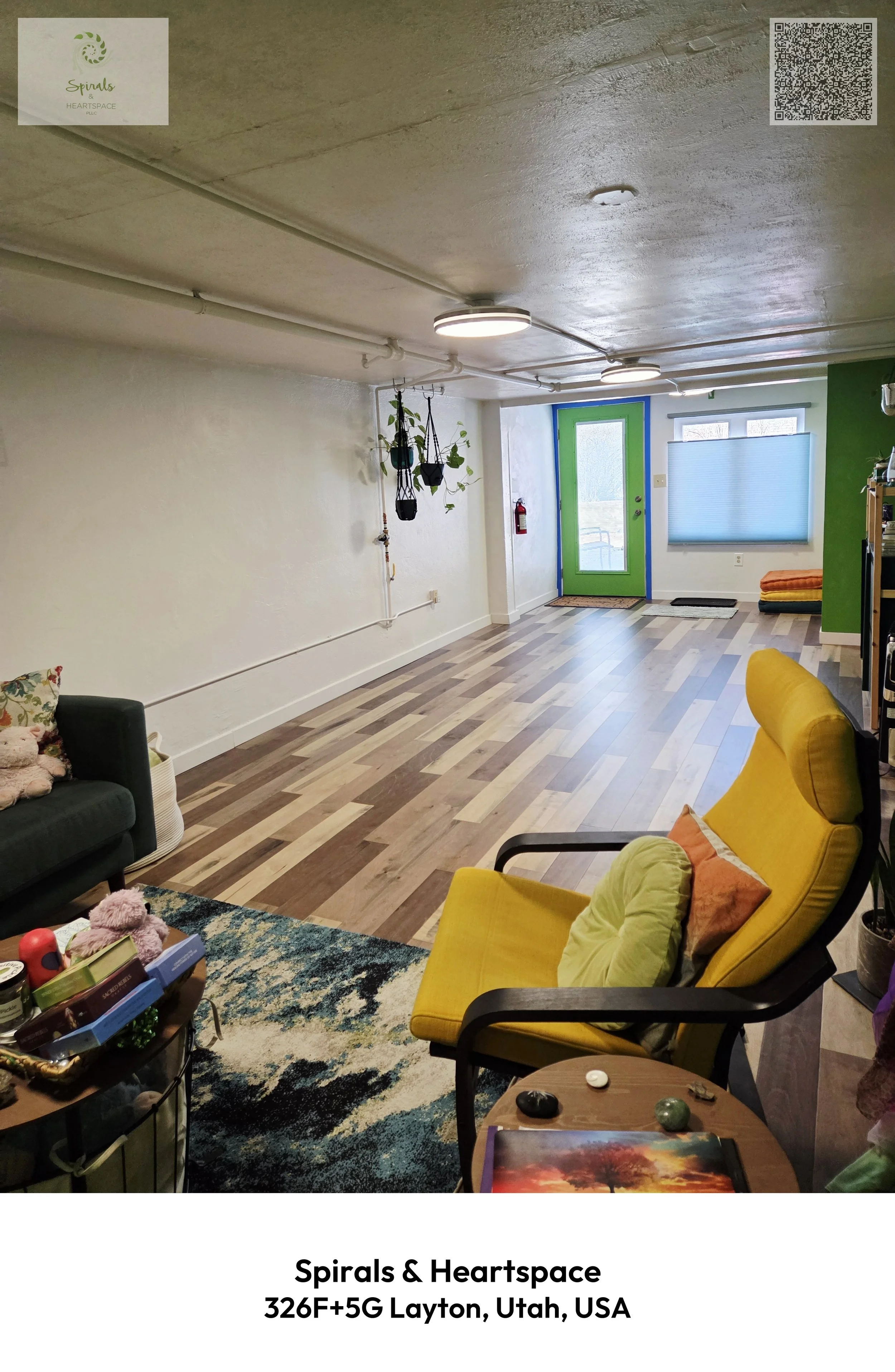
Spirals & Heartspace
Name: Spirals & HeartspaceAddress: 534 W Gentile St, Layton, UT 84041
Phone: (385) 301-5252
Website: https://spiralsandheartspacehealing.com/
Hours:
Sunday: Closed
Monday: 9:30 AM – 7:00 PM
Tuesday: 9:30 AM – 7:00 PM
Wednesday: 9:30 AM – 7:00 PM
Thursday: 9:30 AM – 7:00 PM
Friday: 9:30 AM – 7:00 PM
Saturday: Closed
Open-location code / plus code: 326F+5G Layton, Utah, USA
Coordinates: 41.0604503, -111.9762128
Map/listing URL: https://www.google.com/maps/place/Spirals+%26+Heartspace/@41.0604503,-111.9762128,766m/data=!3m2!1e3!4b1!4m6!3m5!1s0x875303311f1d4d1b:0xc6859e5e3fceafe2!8m2!3d41.0604503!4d-111.9762128!16s%2Fg%2F11x781dbvb
Embed iframe:
Socials:
Instagram: https://www.instagram.com/spiralsheartspace/
LinkedIn: https://www.linkedin.com/company/spirals-and-heartspace-pllc
TikTok: https://www.tiktok.com/@spiralsheartspace
X: https://x.com/SpiralsHea61786
YouTube: https://www.youtube.com/@SpiralsHeartspace
The practice is led by Ande Welling, a licensed clinical mental health counselor with training in dance/movement therapy, somatic work, EMDR, trauma care, relational neuroscience, and embodied attachment.
Listed services include therapy, coaching, consultation, authentic movement, trauma therapy, somatic therapy, grief counseling, movement therapy, and attachment therapy.
The practice serves adults who want a deeper body-aware approach to trauma, anxiety, depression, grief, burnout, self-abandonment, family patterns, and relationship wounds.
Spirals & Heartspace offers both in-person sessions in Layton and online therapy for clients in Utah.
The practice is locally positioned for clients in Layton, Kaysville, Farmington, Syracuse, Clearfield, Clinton, Roy, Ogden, Bountiful, Davis County, and nearby northern Utah communities.
The office is listed at 534 W Gentile St in Layton, with public listing hours Monday through Friday from 9:30 AM to 7:00 PM.
Prospective clients can call (385) 301-5252 or visit https://spiralsandheartspacehealing.com/ to ask about consultation options, session fit, and scheduling.
The public map listing for Spirals & Heartspace can help clients verify the Gentile Street office before planning an in-person appointment.
Popular Questions About Spirals & Heartspace
What is Spirals & Heartspace?
Spirals & Heartspace is a Layton, Utah psychotherapy and coaching practice offering somatic, trauma-focused, expressive arts, movement-based, and attachment-informed support for adults.
Who is the therapist at Spirals & Heartspace?
The official site identifies Ande Welling as the therapist, coach, movement facilitator, and guide behind Spirals & Heartspace. Listed credentials include LCMHC, BC-DMT, NCC, GL-CMA, BSE, EMDR Trained, and CCTP-II.
Where is Spirals & Heartspace located?
The matching public listing and LinkedIn profile list the address as 534 W Gentile St, Layton, UT 84041.
Does Spirals & Heartspace offer online therapy?
Yes. The official FAQ states that therapy is available in person or through a HIPAA-compliant telehealth platform for clients who live in Utah.
What services does Spirals & Heartspace provide?
Listed services include therapy, coaching, consultation, authentic movement, trauma therapy, somatic therapy, grief counseling, movement therapy, and attachment therapy.
What makes somatic therapy different from traditional talk therapy?
The official Layton page explains that somatic therapy works with body sensations, movement, and physical experience because trauma and emotional patterns can be held in the nervous system, not only in thoughts.
Do clients need dance experience for movement therapy?
No. The official Layton FAQ says no dance training or special physical ability is required, and that movement therapy uses a client’s natural capacity for movement to access emotions and process experiences.
Does Spirals & Heartspace accept insurance?
The official FAQ says the practice does not take insurance directly, but may provide superbills or bill for out-of-network benefits when applicable. Clients should confirm current reimbursement options directly before scheduling.
What are Spirals & Heartspace’s listed hours?
The matching public listing shows Monday through Friday from 9:30 AM to 7:00 PM, with Saturday and Sunday closed. Appointment availability should be confirmed directly.
How can I contact Spirals & Heartspace?
Call (385) 301-5252, visit https://spiralsandheartspacehealing.com/, or use the listed social profiles: https://www.instagram.com/spiralsheartspace/, https://www.linkedin.com/company/spirals-and-heartspace-pllc, https://www.tiktok.com/@spiralsheartspace, https://x.com/SpiralsHea61786, and https://www.youtube.com/@SpiralsHeartspace.
Landmarks Near Layton, UT
Spirals & Heartspace is located on West Gentile Street in Layton, Utah, with in-person therapy available locally and online therapy available for Utah residents. Clients near these landmarks can call (385) 301-5252 or visit https://spiralsandheartspacehealing.com/ to ask about somatic therapy, trauma therapy, movement therapy, grief counseling, attachment therapy, and consultation options.
- 534 W Gentile St — The listed office address for Spirals & Heartspace; clients can use the map listing to verify the office before visiting.
- West Gentile Street — The local street connected with the practice’s Layton office location.
- Downtown Layton — A practical local reference point for clients navigating central Layton.
- Layton Hills Mall — A major Layton shopping landmark and useful orientation point for clients traveling through the city.
- Interstate 15 near Layton — A major northern Utah route that helps clients reach Layton from nearby Davis County communities.
- Layton FrontRunner Station — A transit landmark for clients traveling by commuter rail through Davis County.
- Ellison Park — A local park and community landmark in Layton.
- Great Salt Lake Shorelands Preserve — A major natural landmark west of Layton and a recognizable Davis County destination.
- Hill Air Force Base — A major regional landmark near Layton and Clearfield.
- Kaysville — A nearby Davis County city listed in the practice’s surrounding service area.
- Farmington — A nearby Davis County community included in the broader local service-area language.
- Ogden — A nearby northern Utah city; clients can ask whether online Utah therapy or in-person Layton sessions are the best fit.